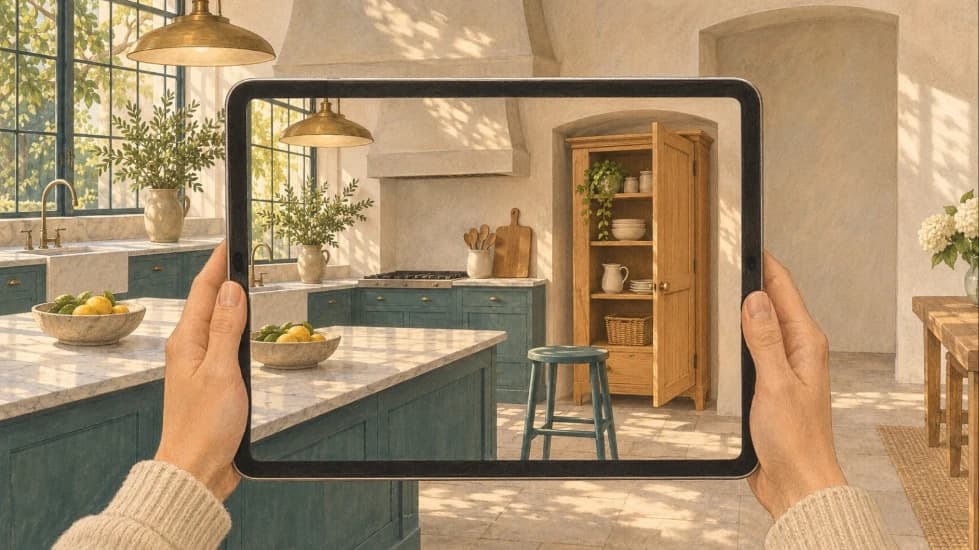
That’s a good reason to reach for augmented reality (AR). The stool, the wall and the awkward corner of your kitchen are already there. The only thing missing is the cabinet. Virtual reality (VR) makes a different bargain: put on a headset and the whole room can change. You can try a new factory layout before anyone moves a machine, or rehearse a handover in a hospital room without tying up the real one.
At Funavry, where we build games and immersive experiences in Unity, we like to start with the moment somebody needs to try for themselves. Sometimes that moment is as ordinary as opening a door. Getting it right takes a few decisions that are easy to miss in a demo.
A convincing preview must survive a change of angle
Suppose you place the cabinet in your kitchen using your phone. In Unity, AR Foundation lets an app test where a tap on the screen meets a detected surface. That test, called a raycast, tells the app where to place the model. An anchor gives the model a tracked point of reference as you walk around it. Neither tells you how wide the real cabinet is. Its dimensions still have to be right in the model. Unity’s AR Foundation guide
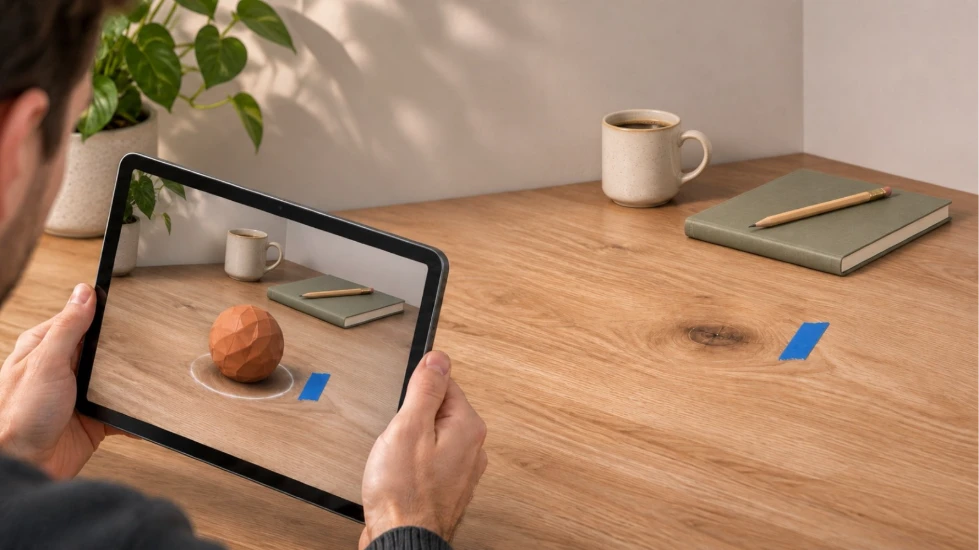
Here’s where we’d spend time on the prototype: walk sideways and watch the cabinet’s back edge against the skirting board. If it slips, even slightly, you’ll stop trusting what the preview tells you about clearance. Smoothing the motion may steady the view when you stand still, yet make the cabinet appear to catch up when you move. A screenshot taken from the front hides both problems.
Now open the door. If the app knows about the floor but hasn’t detected the stool, the virtual door might swing straight through it. For product visualization, that distinction deserves to be visible: the shopper can explore the swing and check the stated dimensions, but the preview shouldn’t promise a fit it hasn’t verified.
When should a virtual tool lend a hand?
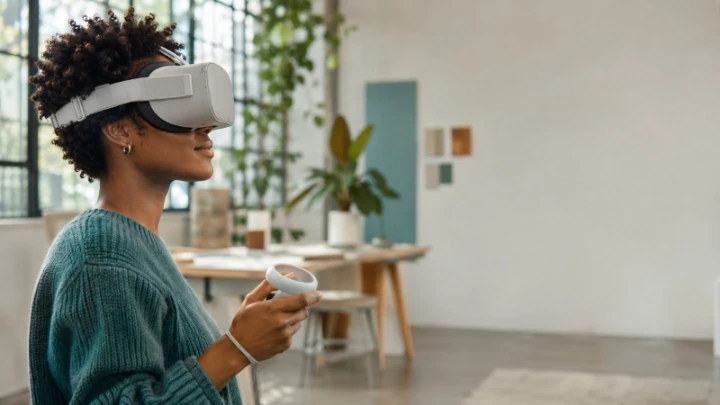
A bit of generosity makes a VR game feel better. You reach for a key, get close enough, and it settles into your grasp. Nobody came to spend five minutes picking a key off the floor. In industrial training, the same kindness can erase the skill someone came to practise.
Consider a trainee fitting a connector. Unity’s XR Interaction Toolkit provides components for grabbing an object and for receiving it in a socket. The design decision is how forgiving that socket should be. If the exercise is about choosing the correct part, a generous snap makes sense. If it’s about aligning the pins, snapping a crooked connector into place teaches the wrong lesson. Record the orientation just before the snap and an instructor can see what the trainee actually did. Unity’s XR Interaction Toolkit guide
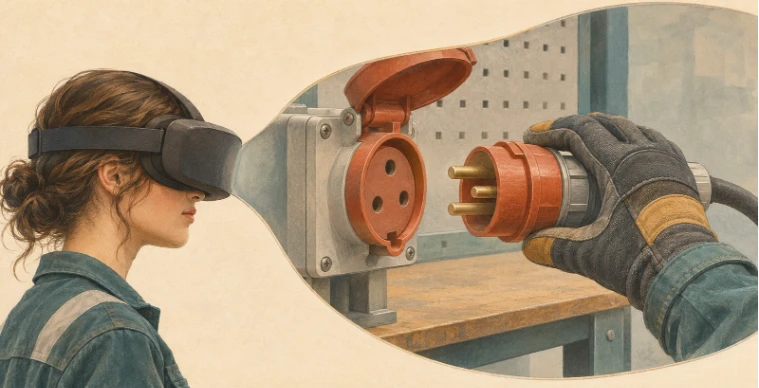
A manufacturing engineer looking at the same assembly might care about something else entirely: the connector fits, but is there room to get a hand in and remove it later? For that review, a plain model of the surrounding housing at the right scale can be more useful than a beautifully rendered connector floating in space.
Give people a reason to look again
Imagine two colleagues rehearsing a patient handover in VR. From the first person’s position, the monitor is plainly visible. From the second person’s, an equipment cart blocks it. Replay the exchange from the other side of the bed and the pair have something specific to discuss. A clinical educator can judge the handover; the simulation helps uncover what each person could actually see.
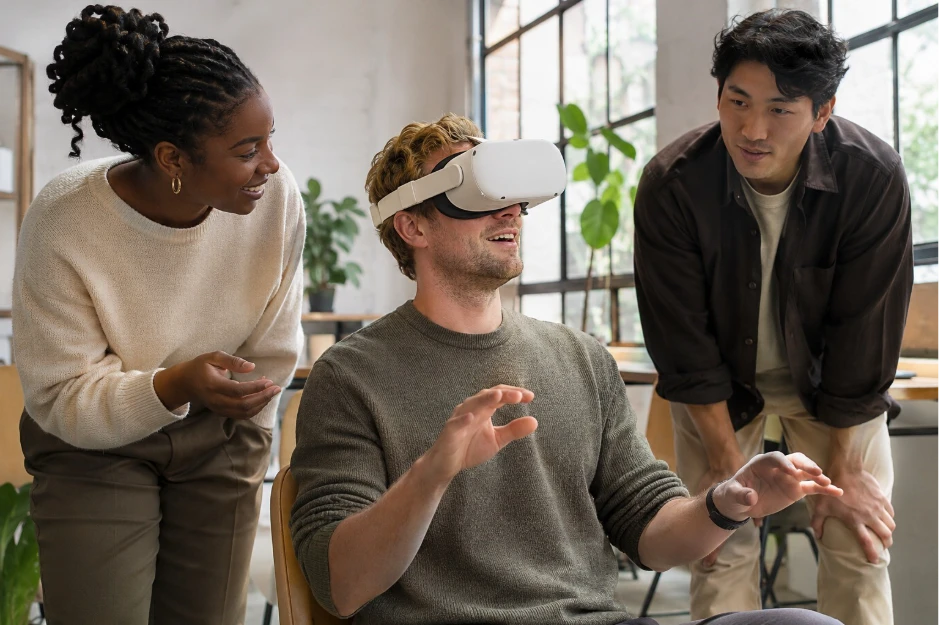
There’s a classroom version of that idea. Give students a virtual lamp, an object and a wall. Before they move the lamp closer, ask them to predict what will happen to the shadow. Now they have a reason to make the movement, watch the result and try again. That prediction is what turns a few seconds of play into a lesson.
When we talk about a new AR or VR idea at Funavry, the most useful first question is often a small one: what would somebody try if they could stand there? If the answer is “open the cabinet door,” build that hinge early. You’ll learn more from watching someone pull the stool out of the way than from another round of polishing the oak finish.